The Difference Between Disposable Cooking Thermometers and Traditional Kitchen Thermometers
The Difference Between Disposable Cooking Thermometers and Traditional Kitchen Thermometers
When people hear the term cooking thermometer, they often think of reusable kitchen measuring devices used at home.
However, disposable cooking thermometers serve a different purpose.
They are designed as integrated temperature indication solutions for specific food products, helping manufacturers provide cooking guidance directly within the product experience.
Understanding the difference between disposable and traditional thermometers helps food companies choose the right solution for their applications.
Different Purposes, Different Designs
Traditional kitchen thermometers are generally designed for repeated personal use.
Consumers purchase them separately and use them to manually measure food temperature during cooking.
Disposable cooking thermometers are designed differently.
They are typically incorporated into food products and intended for single-use applications where simple temperature indication is required.
The main difference is not only the measurement method, but also the role the product plays in the cooking experience.
What Is a Disposable Cooking Thermometer?
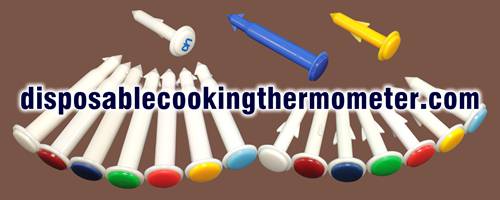
A disposable cooking thermometer is a single-use temperature indication device designed to provide a visible response when a specific cooking temperature is reached.
Unlike electronic thermometers, it does not require:
- Batteries
- Electronic components
- Manual operation
- Separate storage
This makes it suitable for integration into packaged food products where convenience and simplicity are important.
How Traditional Kitchen Thermometers Work
Reusable kitchen thermometers are commonly used by consumers, chefs, and food professionals who need direct temperature measurement.
Typical characteristics include:
- Manual insertion into food
- Repeated use
- Direct temperature reading
- User-controlled operation
They are valuable tools, but they are not always suitable for packaged food products where the manufacturer wants to provide built-in cooking guidance.
Why Food Manufacturers Use Disposable Solutions
Food manufacturers have different requirements compared with individual consumers.
For commercial food products, manufacturers often focus on:
- Product convenience
- Consumer experience
- Packaging integration
- Large-scale consistency
Disposable cooking thermometers can support these goals by becoming part of the finished product rather than an additional kitchen accessory.
Advantages of Disposable Cooking Thermometers in Food Products
Built Into the Product Experience
Consumers do not need to purchase or prepare additional measuring equipment.
Simple Visual Indication
The product communicates temperature information through a straightforward indication method.
Suitable for Large-Scale Production
Disposable solutions can be integrated into commercial food manufacturing processes.
Supports Product Differentiation
Brands can use temperature indication as an additional product feature.
Common Applications
Disposable cooking thermometers are commonly considered for products where cooking temperature plays an important role.
Applications include:
- Whole turkey products
- Chicken products
- Frozen poultry
- Ready-to-cook meals
- Retail meat products
- Private-label food products
Comparison Between Disposable and Traditional Thermometers
| Feature | Disposable Cooking Thermometer | Traditional Kitchen Thermometer |
|---|---|---|
| Usage | Single-use application | Repeated use |
| Integration | Can be included with food products | Purchased separately |
| Operation | Simple temperature indication | Manual measurement |
| Main User | Food manufacturers and consumers | Individual cooks and professionals |
Choosing the Right Temperature Solution
The correct choice depends on the intended application.
Food manufacturers considering disposable cooking thermometers should evaluate:
- Product type
- Cooking method
- Temperature requirement
- Packaging design
- Consumer usage scenario
A solution designed for packaged food applications is different from a general-purpose kitchen measuring tool.
Frequently Asked Questions
Are disposable cooking thermometers less accurate than reusable thermometers?
Disposable cooking thermometers are designed for specific applications and temperature indication requirements rather than general-purpose measurement.
Why do food companies use disposable thermometers?
They use them to provide integrated cooking guidance and improve the consumer experience of packaged food products.
Can disposable cooking thermometers replace kitchen thermometers?
They serve different purposes. Disposable thermometers are designed for product integration, while reusable thermometers are designed for manual measurement.
Are disposable cooking thermometers suitable for commercial food products?
Yes. They are commonly used in various poultry, meat, and ready-to-cook applications.
Understanding the Right Tool for the Right Application
Disposable cooking thermometers and traditional kitchen thermometers are not competing products designed for exactly the same purpose.
They serve different roles within the food preparation process.
For food manufacturers, disposable cooking thermometers provide a practical way to add temperature indication directly into products, helping improve convenience, consistency, and consumer confidence.
Disclaimer: The term "pop up timer" has become a commonly used product description within the cooking and food industry. The products presented on this website are independently manufactured and supplied by LIOU Manufacturing – PopNReady Brand, a China-based factory direct OEM manufacturer specializing in disposable pop-up timers and temperature indicators since 2006. We have no affiliation, partnership, authorization, or business relationship with any other brand, trademark owner, or manufacturer unless specifically stated.