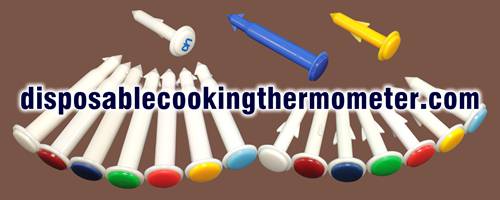
How Food Brands Use Disposable Cooking Thermometers to Improve Ready-to-Cook Product Performance
How Food Brands Use Disposable Cooking Thermometers to Improve Ready-to-Cook Product Performance
The ready-to-cook food market continues to grow as consumers look for products that save time while still delivering reliable results.
For food brands, creating a successful ready-to-cook product involves much more than developing a recipe. Manufacturers must consider processing, packaging, transportation, preparation instructions, and the final cooking experience at home.
One challenge remains consistent across many categories: helping consumers understand when a product has reached the intended internal temperature.
This is where disposable cooking thermometers provide practical value by connecting food manufacturing with consumer cooking performance.
The Changing Expectations of Ready-to-Cook Food Products
Modern consumers expect convenience without sacrificing quality.
Frozen poultry, prepared meals, and packaged meat products are designed to simplify cooking, but they still need to provide clear guidance during preparation.
Unlike restaurant kitchens or industrial environments, household cooking conditions vary significantly.
- Different oven designs
- Different cooking habits
- Different levels of cooking experience
- Different preparation environments
Food brands that address these differences can create stronger consumer confidence.
Why Cooking Guidance Matters for Food Brands
A successful food product does not end when it leaves the factory.
The final consumer experience can influence:
- Customer satisfaction
- Repeat purchases
- Brand reputation
- Product reviews
For products that require cooking before consumption, providing a clear temperature-based indication can reduce uncertainty and improve usability.
Disposable Cooking Thermometers as a Product Feature
Disposable cooking thermometers are not simply measuring devices. In commercial food products, they can become part of the overall product design strategy.
They provide a simple visual signal that helps consumers understand cooking progress without requiring separate equipment.
For food brands, this creates a convenient way to add functional value to packaged products.
Applications Across Different Food Categories
Although disposable cooking thermometers are commonly associated with turkey products, their applications extend across many food categories.
Examples include:
- Whole poultry products
- Chicken products
- Frozen meat products
- Ready-to-cook meals
- Private-label food products
- Food service products
Each application may require different temperature settings and product considerations.
Supporting Private Label and Retail Strategies
Private-label brands compete through more than price.
Retailers increasingly focus on convenience, customer experience, and product differentiation.
A built-in cooking indicator can help transform a standard food product into a more user-friendly solution.
For retailers and brand owners, this additional feature can support stronger product positioning in competitive markets.
The Importance of Reliable Temperature Indication
For food manufacturers, consistency is essential.
A temperature indicator must perform reliably across large production quantities because every finished product represents the brand.
Important considerations include:
- Accurate activation performance
- Stable material properties
- Consistent manufacturing processes
- Reliable supply capability
A dependable indicator solution helps brands maintain a predictable consumer experience.
From Product Development to Market Success
When developing a new ready-to-cook product, food companies consider many elements together:
- Recipe design
- Processing methods
- Packaging format
- Cooking instructions
- Consumer convenience
A disposable cooking thermometer can become one part of this larger product development process.
By considering temperature indication during early development stages, manufacturers can create products that are easier for consumers to prepare successfully.
Frequently Asked Questions
Why do food brands add disposable cooking thermometers to products?
Food brands use them to provide consumers with easier cooking guidance and improve confidence during preparation.
Are disposable cooking thermometers suitable for private-label products?
Yes. Commercial solutions may support customized specifications, packaging, and branding requirements for private-label applications.
Can they be used for frozen ready-to-cook meals?
Yes. They can be designed for different food applications depending on product structure, cooking method, and temperature requirements.
What makes a reliable cooking thermometer supplier?
Important factors include manufacturing experience, product consistency, quality control, customization capability, and long-term supply support.
A Small Component That Supports Better Food Experiences
For consumers, a disposable cooking thermometer may appear to be a simple convenience feature.
For food manufacturers, however, it represents a connection between product engineering, cooking performance, and customer satisfaction.
As ready-to-cook food continues evolving globally, temperature indication technology will remain an important tool for helping brands deliver more consistent cooking experiences.
Disclaimer: The term "pop up timer" has become a commonly used product description within the cooking and food industry. The products presented on this website are independently manufactured and supplied by LIOU Manufacturing & PopNReady, a China-based production company specializing in disposable pop-up timers and temperature indicators since 2006. We have no affiliation, partnership, authorization, or business relationship with any other brand, trademark owner, or manufacturer unless specifically stated.