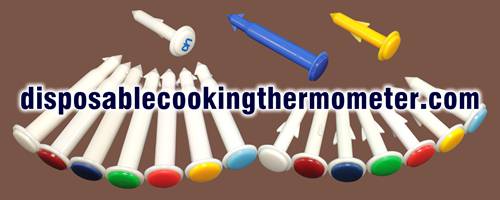
Why Food-Grade Materials Matter in Disposable Cooking Thermometers
Why Food-Grade Materials Matter in Disposable Cooking Thermometers
Disposable cooking thermometers are small components, but they play an important role in modern food products.
Because these devices are used in cooking applications and may come into contact with food products, material selection is one of the most important considerations during manufacturing.
For food manufacturers, understanding the materials behind disposable cooking thermometers helps ensure product safety, reliability, and compliance with application requirements.
The Importance of Material Selection in Food Applications
Food-related products require a higher level of material consideration than many general consumer products.
Materials used in food applications should be selected based on factors such as:
- Food contact suitability
- Temperature resistance
- Mechanical performance
- Manufacturing consistency
A well-designed disposable cooking thermometer depends on the combination of suitable materials and controlled production processes.
What Makes a Material Food-Grade?
Food-grade materials are materials selected and manufactured for applications where contact with food is expected.
They are designed to meet specific requirements related to:
- Safety during intended use
- Material stability
- Resistance to normal operating conditions
- Product reliability
For disposable cooking thermometers, every component must be considered as part of the complete food-contact system.
Key Materials Used in Disposable Cooking Thermometers
A disposable cooking thermometer is typically composed of several functional parts, each serving a specific purpose.
Food-Grade Plastic Components
The external housing and structural components require materials that provide strength, stability, and suitability for food applications.
Food-grade nylon materials such as PA66 are commonly selected in professional manufacturing because they provide:
- Good mechanical strength
- Dimensional stability
- Reliable performance during cooking applications
Temperature-Sensitive Material
The internal temperature sensing element is the core functional part of a disposable cooking thermometer.
Its performance depends on accurate response characteristics and stable material properties.
Metal Spring Components
The mechanical spring system provides the movement required for visible indication.
The quality and consistency of this component influence product reliability and performance.
Why BPA-Free Materials Are Important
Consumers and food manufacturers increasingly pay attention to material transparency.
BPA-free materials are commonly preferred in food-related applications because they address consumer concerns regarding chemical exposure.
For brands developing food products, material information can become an important part of quality communication.
Material Quality and Product Performance
Material selection does not only affect safety.
It also influences product performance.
Important performance factors include:
- Temperature response consistency
- Structural reliability
- Resistance during cooking conditions
- Production stability
A disposable cooking thermometer must perform consistently across large quantities of products in commercial food applications.
Why Food Manufacturers Should Understand Component Quality
When food companies evaluate suppliers, they often focus on finished product appearance and price.
However, the technical foundation behind the product is equally important.
Understanding material choices helps buyers evaluate:
- Supplier professionalism
- Manufacturing capability
- Quality management approach
- Long-term reliability
Material Considerations for Different Food Applications
Different food products may create different requirements for disposable cooking thermometers.
Manufacturers may consider:
- Cooking temperature range
- Food product structure
- Packaging environment
- Production process
Selecting appropriate materials helps ensure that the temperature indication solution matches the intended application.
Frequently Asked Questions
Why are food-grade materials important for disposable cooking thermometers?
Because these products are used in food applications, material safety and reliability are essential parts of product quality.
What materials are commonly used in disposable cooking thermometers?
Professional products may include food-grade plastic components, temperature-sensitive materials, and precision mechanical parts.
Are BPA-free materials important for food products?
Yes. BPA-free materials are commonly preferred for food-related applications and consumer products.
Do materials affect thermometer accuracy?
Yes. Material consistency can influence temperature response, mechanical performance, and overall reliability.
Quality Begins With the Materials Behind the Product
A disposable cooking thermometer may appear simple, but its performance depends on careful engineering and material selection.
For food manufacturers, choosing products made with appropriate food-grade materials helps support safer, more reliable, and more consistent food applications.
Understanding the materials behind these products is an important step toward building better food solutions and stronger supply chains.
Disclaimer: The term "pop up timer" has become a commonly used product description within the cooking and food industry. The products presented on this website are independently manufactured and supplied by LIOU Manufacturing – PopNReady Brand, a China-based factory direct OEM manufacturer specializing in disposable pop-up timers and temperature indicators since 2006. We have no affiliation, partnership, authorization, or business relationship with any other brand, trademark owner, or manufacturer unless specifically stated.