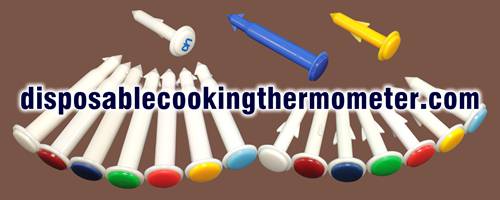
Why Food Manufacturers Prefer Disposable Cooking Thermometers for Ready-to-Cook Products
Why Food Manufacturers Prefer Disposable Cooking Thermometers for Ready-to-Cook Products
Ready-to-cook food products have become an important category in the modern food industry.
Consumers increasingly expect food products that save preparation time while still delivering reliable cooking results.
For manufacturers, this creates a challenge: how to ensure that products maintain quality after leaving the controlled factory environment and entering different consumer kitchens.
Disposable cooking thermometers provide one practical solution by helping connect professional food production with consumer cooking performance.
The Growing Demand for Ready-to-Cook Food Solutions
Convenience has become a major factor influencing food purchasing decisions.
Consumers want products that are easy to prepare, but convenience alone is not enough.
They also expect:
- Consistent cooking results
- Clear preparation guidance
- Confidence during cooking
- Reliable product performance
For food manufacturers, improving the cooking experience can become an important part of product development.
The Challenge of Consumer Cooking Conditions
Food manufacturers operate under controlled production environments.
However, once products reach consumers, preparation conditions can vary significantly.
Factors that influence cooking results include:
- Different ovens and cooking equipment
- Different product sizes
- Different starting temperatures
- Different consumer cooking habits
Because of these variations, providing effective cooking guidance becomes an important responsibility for food brands.
How Disposable Cooking Thermometers Support Ready-to-Cook Products
A disposable cooking thermometer provides a simple temperature-based indication during the cooking process.
Unlike traditional measuring devices that require separate purchase and operation, it can become part of the food product itself.
This creates several advantages:
- Easy-to-understand cooking feedback
- Improved consumer convenience
- Reduced uncertainty during preparation
- Additional product functionality
Applications Across Different Food Categories
Ready-to-cook products cover a wide range of applications where temperature indication can provide value.
Common examples include:
- Whole turkey products
- Chicken products
- Frozen poultry products
- Meat-based ready meals
- Retail prepared food products
- Private-label food items
Each product category may require different temperature specifications based on product design and cooking requirements.
Improving Consumer Confidence Through Simple Indication
One of the biggest challenges for ready-to-cook products is consumer uncertainty.
Many consumers are unsure whether food has reached the correct cooking stage, especially when preparing larger products such as whole poultry or meat items.
A disposable cooking thermometer provides a visible indication that helps consumers feel more confident about the preparation process.
Benefits for Food Manufacturers
For commercial food companies, adding a temperature indication feature can provide value beyond basic cooking guidance.
Supporting Product Differentiation
In competitive retail markets, small functional improvements can help products stand out.
Enhancing Brand Experience
A product that is easier to prepare can create stronger customer satisfaction.
Improving Product Communication
Temperature indication provides another way for brands to communicate product quality and thoughtful design.
Why Disposable Solutions Fit Commercial Food Applications
Disposable cooking thermometers are designed for single-product use, making them suitable for many packaged food applications.
Their advantages include:
- No battery requirements
- No electronic components
- Simple consumer operation
- Easy integration into product packaging
These characteristics make them practical for large-scale food manufacturing environments.
Important Factors When Selecting a Solution
Food manufacturers usually consider several factors before integrating a disposable cooking thermometer.
- Activation temperature
- Product compatibility
- Material requirements
- Production consistency
- Packaging integration
- Supplier experience
Selecting the right solution requires understanding both the food product and the consumer preparation process.
Frequently Asked Questions
Why do ready-to-cook food manufacturers use disposable cooking thermometers?
They use them to provide additional cooking guidance and improve consumer confidence when preparing packaged food products.
Are disposable cooking thermometers suitable for frozen products?
Yes. They are commonly considered for frozen poultry, meat products, and other ready-to-cook applications.
Can food manufacturers customize temperature settings?
Yes. Commercial applications may require different activation temperatures based on product requirements.
Do disposable cooking thermometers replace cooking instructions?
No. They complement cooking instructions by providing an additional temperature indication reference.
Connecting Food Manufacturing With Consumer Success
The success of a ready-to-cook food product depends not only on manufacturing quality but also on the final consumer experience.
Disposable cooking thermometers provide a practical connection between these two stages by helping consumers better understand cooking progress.
As food manufacturers continue developing more convenient and consumer-focused products, temperature indication solutions will remain an important part of modern food innovation.
Disclaimer: The term "pop up timer" has become a commonly used product description within the cooking and food industry. The products presented on this website are independently manufactured and supplied by LIOU Manufacturing – PopNReady Brand, a China-based factory direct OEM manufacturer specializing in disposable pop-up timers and temperature indicators since 2006. We have no affiliation, partnership, authorization, or business relationship with any other brand, trademark owner, or manufacturer unless specifically stated.