Why Food Manufacturers Are Rethinking Disposable Pop-Up Timer Procurement
Why Food Manufacturers Are Rethinking Disposable Pop-Up Timer Procurement
For many food manufacturers, disposable pop-up timers have traditionally been viewed as a minor packaging component. They represent only a small fraction of total product cost, are lightweight, easy to install, and often receive far less attention than ingredients, packaging films, labels, or processing equipment.
However, procurement teams across the poultry, meat processing, frozen food, and ready-meal industries are beginning to take a different view.
In recent years, increasing food safety requirements, tighter quality standards, rising consumer expectations, and global supply chain disruptions have forced manufacturers to reassess every component that affects product performance. Disposable pop-up timers are now being evaluated not simply as accessories, but as functional food-contact devices that directly influence cooking accuracy, customer satisfaction, and brand reputation.
As a result, many buyers are moving away from purely price-driven purchasing decisions and are instead focusing on supplier specialization, material safety, manufacturing consistency, and long-term supply reliability.
The Hidden Impact of a Small Component
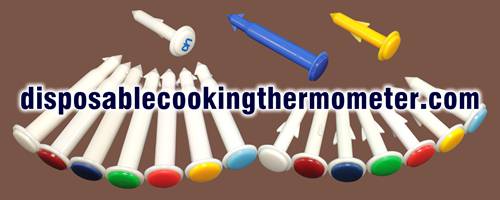
At first glance, a disposable pop-up timer appears simple. Once inserted into poultry, meat, or prepared food products, the timer automatically rises when a predetermined internal temperature is reached, providing consumers with a clear visual indication that cooking is complete.
Yet behind this simple function lies a carefully engineered combination of temperature-sensitive materials, food-contact polymers, precision springs, and manufacturing tolerances.
When a timer performs correctly, consumers enjoy a more predictable cooking experience. Products are less likely to be undercooked or excessively overcooked. Confidence in the brand increases, and customer complaints remain low.
When a timer fails, however, the consequences can be significant:
- Inconsistent cooking guidance
- Consumer dissatisfaction
- Product returns and complaints
- Potential food safety concerns
- Damage to brand credibility
For food manufacturers producing millions of units annually, even a small increase in timer failure rates can translate into substantial operational and reputational costs.
Why Procurement Priorities Have Changed
Several industry trends are driving a shift in sourcing strategy.
1. Increased Focus on Consumer Cooking Outcomes
Consumers today expect convenience without sacrificing safety or quality. Products designed for home cooking must deliver reliable results across a wide range of ovens, cooking environments, and user skill levels.
A properly calibrated disposable pop-up timer acts as a simple yet effective cooking guide. Because it communicates readiness visually, it eliminates much of the uncertainty consumers face when preparing poultry or meat products.
Manufacturers increasingly recognize that the timer is part of the overall customer experience rather than merely a packaging accessory.
2. Stronger Food Safety Expectations
Food-contact components are receiving greater scrutiny from both regulators and buyers. Materials used in disposable cooking indicators must comply with applicable food safety requirements and maintain performance under cooking conditions.
Procurement departments now routinely request documentation regarding:
- Food-contact compliance
- Material traceability
- Migration safety
- Heavy metal restrictions
- Manufacturing quality controls
The days of sourcing solely based on unit price are rapidly disappearing.
3. Supply Chain Stability Matters More Than Ever
Recent disruptions across global manufacturing networks exposed vulnerabilities in many procurement strategies.
Companies that relied on trading companies or multiple intermediary layers often experienced communication delays, inconsistent quality, and limited visibility into actual production capabilities.
This has encouraged many buyers to work directly with specialized manufacturers that control production internally and maintain stable quality systems.
The Advantages of Working with a Specialized Manufacturer
Not all suppliers in the disposable pop-up timer industry operate under the same business model.
Some companies act primarily as traders, sourcing products from various factories and reselling them to international customers. Others function as direct manufacturers with dedicated production expertise.
For B2B buyers, this distinction can significantly affect product consistency and long-term procurement success.
Dedicated Product Expertise
Manufacturers focused exclusively on disposable pop-up timers accumulate years of application knowledge, process optimization experience, and technical understanding that general trading companies often cannot provide.
This specialization becomes particularly valuable when customers require:
- Custom activation temperatures
- Private label projects
- OEM development
- Application-specific performance requirements
- Large-scale production programs
Improved Quality Control
Consistency is critical in temperature-sensitive products.
A professional manufacturing operation can maintain tighter control over:
- Raw material selection
- Wax formulation consistency
- Spring performance
- Injection molding quality
- Assembly precision
- Batch testing procedures
These controls help ensure reliable activation performance across large production volumes.
Better Communication and Faster Problem Resolution
When buyers communicate directly with the factory, technical questions can be answered more efficiently. Product modifications, quality investigations, and development projects often move faster because fewer intermediaries are involved.
Direct access to production knowledge can significantly shorten decision-making cycles.
What Leading Buyers Now Look For
As procurement standards mature, experienced buyers increasingly evaluate suppliers using a broader set of criteria.
Material Safety
Food-grade construction is no longer optional.
High-quality disposable pop-up timers are commonly manufactured using food-grade PA66 nylon components, food-safe temperature-sensitive waxes, and precision metal springs engineered for consistent performance.
BPA-free materials and compliance with international food-contact standards are often viewed as baseline requirements rather than premium features.
Temperature Accuracy
Activation accuracy directly affects product performance.
A supplier capable of maintaining temperature consistency within a narrow tolerance range helps manufacturers deliver a more predictable cooking experience to consumers.
For high-volume food production programs, precision becomes a measurable quality advantage rather than a marketing claim.
Certification and Compliance
Procurement teams increasingly prefer suppliers that operate under recognized compliance frameworks and maintain supporting documentation.
Relevant certifications may include:
- FDA compliance
- EU food-contact compliance
- BRC-related quality systems
- Documented quality assurance procedures
Manufacturing Track Record
Longevity often reflects operational stability.
Suppliers with extensive experience serving international markets generally possess a deeper understanding of export requirements, documentation standards, and quality expectations.
For many buyers, a proven manufacturing history reduces procurement risk and increases confidence in long-term cooperation.
Factory-Direct Procurement Is Becoming the Preferred Model
One of the most notable shifts in recent years has been the growing preference for factory-direct sourcing.
Rather than purchasing through multiple intermediary layers, food manufacturers increasingly seek direct relationships with production facilities.
The benefits are straightforward:
- More transparent pricing
- Better quality visibility
- Shorter communication channels
- Greater technical support
- Improved customization capabilities
- Enhanced supply continuity
For organizations managing large procurement volumes, these advantages can generate meaningful operational value over time.
The Future of Disposable Pop-Up Timer Sourcing
As food manufacturing continues to evolve, procurement strategies are becoming more sophisticated. Buyers are no longer evaluating suppliers solely on unit cost. Instead, they are considering the broader impact that every component has on food safety, consumer satisfaction, brand protection, and supply chain resilience.
Disposable pop-up timers may be small in size, but their role in modern food production is increasingly significant.
Manufacturers that prioritize technical expertise, material safety, quality consistency, and direct factory partnerships are positioning themselves to meet the expectations of both regulators and consumers in the years ahead.
For procurement professionals, the question is no longer simply where to buy disposable pop-up timers. The more important question is whether the chosen supplier can consistently support product quality, food safety objectives, and long-term business growth.