Why Internal Temperature Matters More Than Cooking Time
Why Internal Temperature Matters More Than Cooking Time
For generations, cooking instructions have often been based on time: bake for a certain number of minutes, roast for a certain number of hours, or follow a recommended cooking schedule.
While cooking time remains useful, it does not always tell the complete story.
The most important factor in determining whether meat and poultry products have reached the intended cooking condition is internal temperature.
This simple principle is one of the reasons why disposable cooking thermometers and pop-up temperature indicators continue to play an important role in modern food manufacturing.
Cooking Time Is Only an Estimate
Cooking time provides a general guideline, but many factors can influence how quickly food reaches the required internal temperature.
These factors include:
- Product weight and thickness
- Starting temperature before cooking
- Oven temperature accuracy
- Air circulation inside the oven
- Product shape and composition
- Bone and moisture content
Two products with the same weight may require different cooking times depending on their structure and cooking environment.
This is why professional food production focuses on temperature measurement rather than relying only on time calculations.
Internal Temperature Shows What Happens Inside the Product
The outside surface of food experiences heat first.
During cooking, heat gradually moves from the outside toward the center. The surface may become browned and visually appealing while the internal temperature continues rising.
Because the center is usually the slowest area to heat, it becomes the most important location for evaluating cooking progress.
Internal temperature provides information that appearance alone cannot provide.
Why Appearance Can Be Misleading
Many consumers naturally judge doneness by visual signs:
- Golden-brown skin
- Crisp surface texture
- Clear cooking juices
- Firm product structure
Although these characteristics may indicate progress, they do not always accurately represent the temperature inside the product.
A product can look finished while still requiring additional cooking time to reach the desired internal temperature.
This difference between appearance and internal condition is one of the challenges faced by both consumers and food manufacturers.
The Importance of Temperature Control in Poultry Processing
Poultry products require particularly careful temperature management because they are often produced, distributed, and prepared under many different conditions.
Large poultry processors must consider not only their own production standards but also how consumers will eventually prepare the product at home.
A consistent cooking indicator can help create a connection between industrial food production and consumer cooking behavior.
How Disposable Cooking Thermometers Help Bridge the Gap
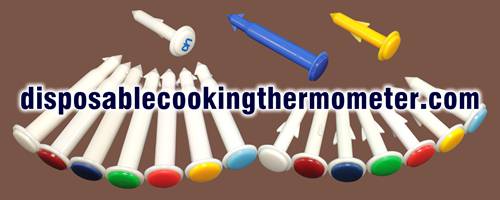
A disposable cooking thermometer transforms internal temperature into a simple visual message.
Instead of requiring consumers to insert a separate thermometer and interpret a numerical reading, the product provides an integrated indication during cooking.
This approach offers several advantages:
- Convenience: No additional measuring tools are required.
- Consistency: Consumers receive a clearer cooking reference.
- Product Experience: Food brands can provide additional guidance within the package itself.
For manufacturers, this creates an opportunity to improve the overall customer experience without adding complexity to the cooking process.
Why Food Manufacturers Focus on Repeatability
In commercial food production, the challenge is not simply making one product cook correctly.
The challenge is ensuring that thousands or millions of products perform consistently.
Food manufacturers evaluate:
- Cooking performance
- Temperature response
- Consumer usability
- Production consistency
- Packaging compatibility
A reliable temperature indication system supports repeatable results across different production batches and consumer environments.
Internal Temperature and Consumer Confidence
Modern food consumers increasingly expect convenience, reliability, and clear instructions.
A product that helps communicate cooking progress can reduce uncertainty and improve confidence during preparation.
This is especially valuable for premium poultry products, private-label food brands, and ready-to-cook meal solutions where customer experience directly influences brand perception.
Temperature Indicators Are a Practical Food Technology
Disposable cooking thermometers represent a simple example of applied food technology.
They do not replace professional food testing or industrial quality systems. Instead, they provide a practical way to communicate internal cooking progress in everyday applications.
Behind the small visible indicator is a combination of thermal science, material engineering, and manufacturing precision.
Frequently Asked Questions
Why is internal temperature more reliable than cooking time?
Cooking time can change depending on product size, oven conditions, and preparation methods. Internal temperature directly reflects the condition of the food at the center.
Can food look cooked before reaching the correct internal temperature?
Yes. Surface appearance does not always indicate what is happening inside the product. Internal temperature provides a more reliable measurement.
Why do poultry companies use temperature indicators?
Poultry companies use temperature indicators to improve cooking consistency, enhance consumer guidance, and support the performance of packaged food products.
Are disposable cooking thermometers only used for turkey?
No. They can be used for various poultry and meat applications, including chicken, turkey, frozen poultry products, and ready-to-cook food items.
The Future of Cooking Guidance in Packaged Foods
As food products become more convenient and consumers continue seeking easier preparation methods, built-in cooking guidance will remain an important product feature.
Internal temperature will continue to be the foundation of reliable cooking decisions because it reflects what truly happens inside the food.
For food manufacturers, understanding this principle is the first step toward developing products that perform consistently from the processing facility to the consumer kitchen.
Disclaimer: The term "pop up timer" has become a commonly used product description within the cooking and food industry. The products presented on this website are independently manufactured and supplied by a Chinese production company. We have no affiliation, partnership, authorization, or business relationship with any other brand, trademark owner, or manufacturer unless specifically stated.